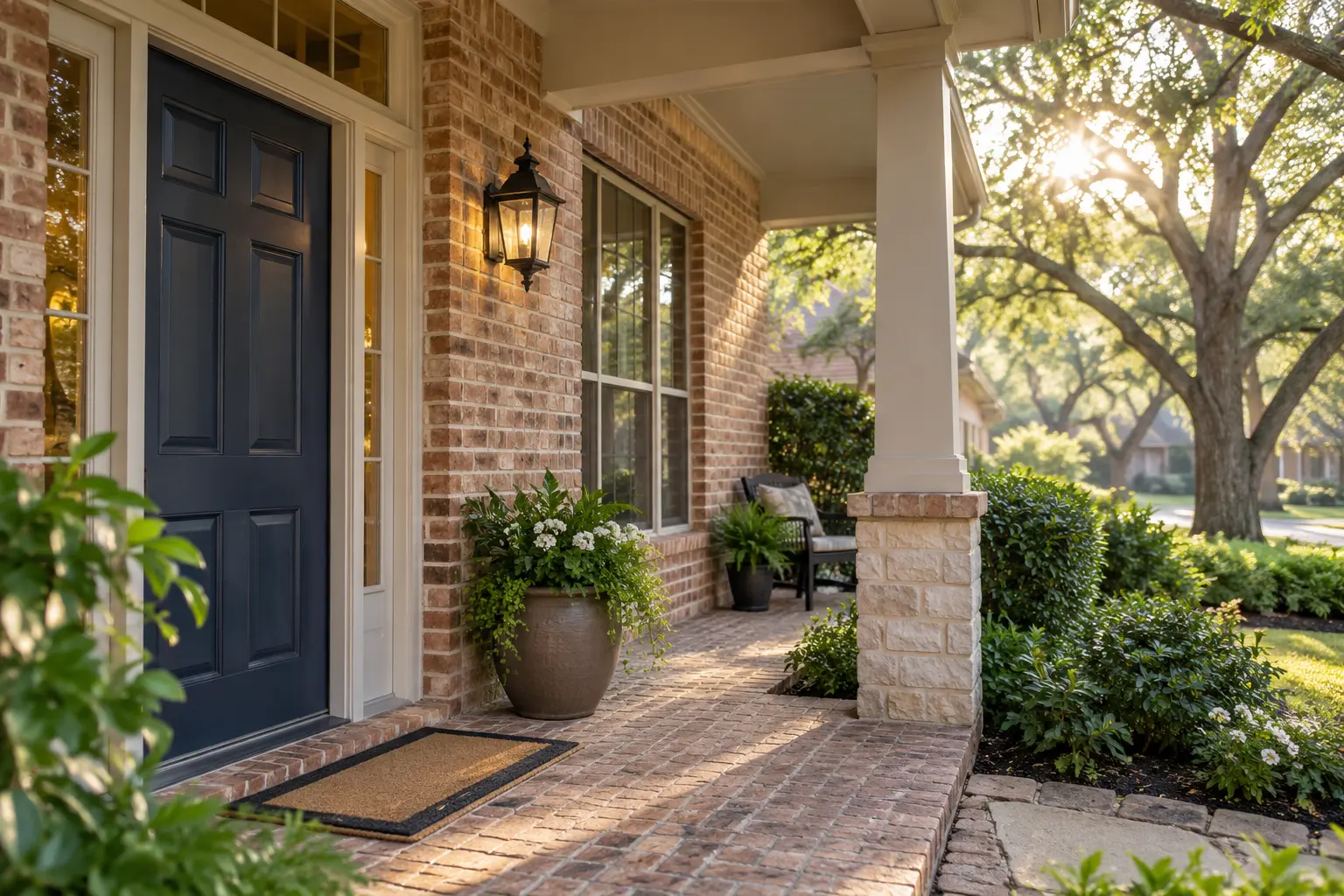
When rekeying fits naturally
Access changes after ordinary transitions.
The closing-day handoff
A buyer receives two keys but no reliable list of prior copies. The hardware works well. A whole-home opening count and compatibility check can turn the unknown key history into a clearer plan.
The contractor key
Renovation is complete, several trades had access, and the owner wants the permanent household keys to be the only approved set. Count doors before assuming the front entry is the only cylinder involved.
The staff transition
A business key was not returned. Map the doors it could reach, check master relationships, and decide whether the change affects one opening, one group, or the broader key system.
01 - The difference
Rekeying is not lock replacement.
A rekey changes the internal key combination of a compatible serviceable cylinder so old keys no longer operate it and approved new keys do. The visible hardware usually remains. That can make sense when access needs to change but the lock's condition and function are still suitable.
Replacement changes the lock or related hardware. It may be more appropriate when parts are damaged, severely worn, incompatible with the desired key system, missing a needed function, or part of a broader door upgrade. Inspection can reveal when rekeying would preserve a problem rather than solve it.
02 - The count
Walk every exterior opening.
Count front, side, patio, garage-connection, storage, office, receiving, and any other approved exterior doors. Try the current keys and note which cylinders already share a key. It is easy to forget the door used only for trash pickup or backyard access.
Photograph both sides of unusual hardware. Record brand markings when visible without disassembly. Similar-looking locks may use different keyways or cylinders, and additions made over several years may not be compatible with one common key.
- All exterior doors counted
- Current keys tested
- Former key holders listed
- Hardware condition noted
- Key groups chosen
- Spare-key custody assigned
03 - The people
Decide who enters where.
A new homeowner, landlord, family, caregiver, cleaner, contractor, office manager, and warehouse employee may need different access. Before work starts, define the permanent users, temporary users, and old holders who should no longer enter.
Putting compatible locks on one key can simplify daily life, but it also gives that key broader reach. A business may prefer role-based groups. A household may want one exterior key and a separate key for a detached workspace or rental area.
Do not label loose keys with a full address.
Use a simple private record that tells authorized users what each key opens without turning a lost key ring into a map. Count and test every approved key before the visit ends.
04 - After the rekey
Old keys should fail. New keys should work.
Test each new key in every intended cylinder from the normal side of the closed door. The key should enter, turn, and return without bending or excessive force. Confirm that old keys no longer operate the changed locks.
If a deadbolt binds only when the door closes, rekeying has not caused or solved the alignment issue. Document the separate door symptom and decide whether repair or adjustment should follow.
Keep one controlled spare.
Place the spare with a trusted person or in a secure documented location. A hidden exterior key can undermine the access change you just paid to make.
Common questions
Rekeying questions.
It often uses the existing compatible hardware, but the actual amount depends on cylinder type, quantity, condition, key plan, location, and service time. Compare the complete scopes.
Sometimes, but visual similarity is not enough. The cylinders and keyways must be compatible, and the proposed key plan should be checked before promising one-key operation.
That is the purpose of rekeying the changed cylinders. Test the approved new keys and confirm that the old keys no longer operate each completed lock.
The electronic credentials and mechanical backup cylinder are separate concerns. The exact product determines which parts can be rekeyed, reset, or managed through the owner account.
Before the rekey appointment
Build a tiny key map.
Use a sheet of paper or phone note. Give each door a simple name, list the current key that opens it, and mark which doors should share access after the work. Add the number of new keys needed for each approved person.
Mention rental, HOA, commercial lease, shared-building, fire-door, or property-management restrictions. The person requesting changes should have authority over every affected opening.
- Door names
- Desired key groups
- Number of approved keys
- Old key holders
- Ownership or management proof
- Separate repair symptoms